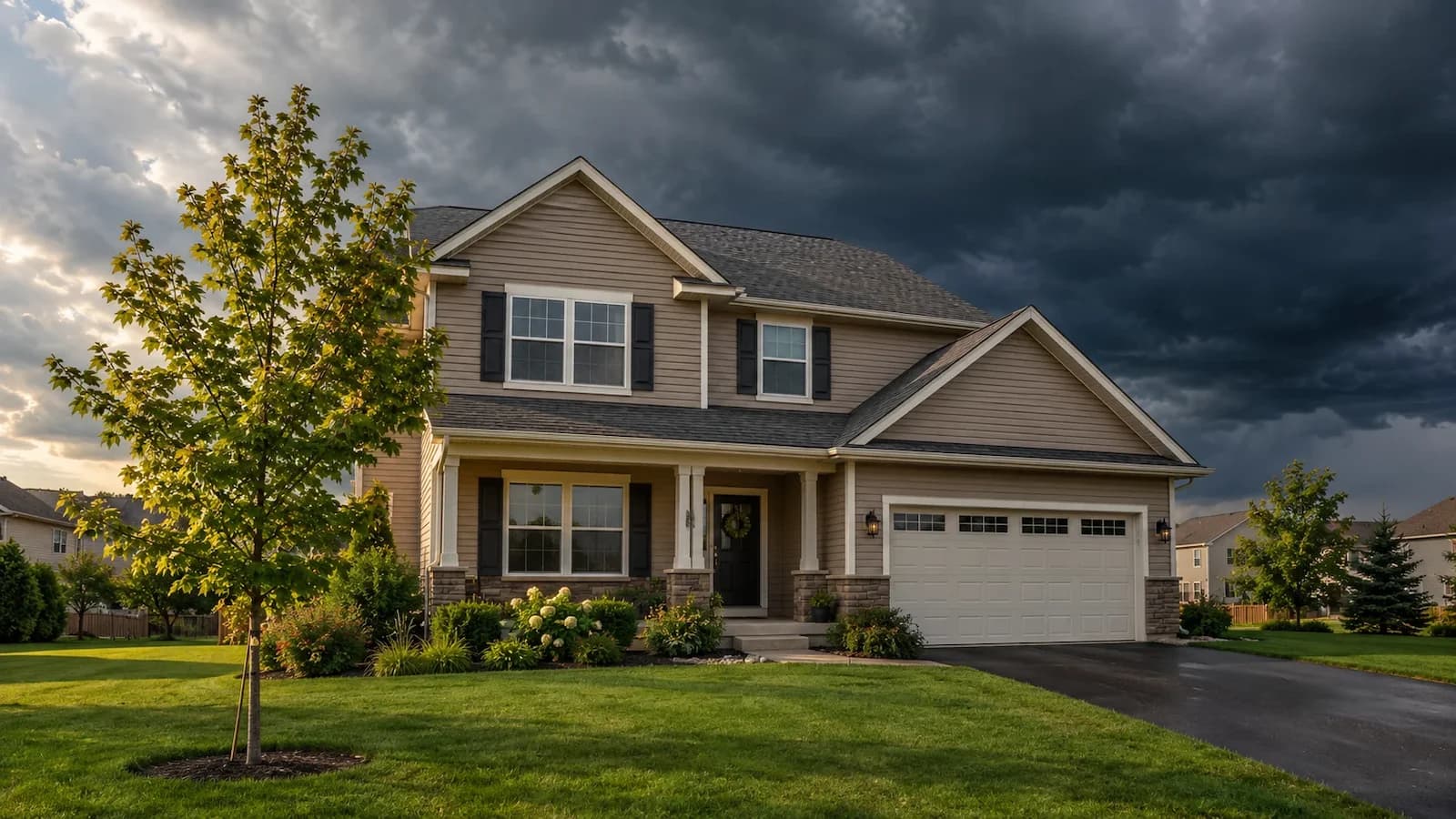
Choosing a deductible is one of the few decisions on a Minnesota homeowners policy that you control directly, and it moves your premium more than most people expect. In Shakopee the stakes are specific: hail and thunderstorms that punish roofs and siding, straight-line wind, hard winters full of ice dams and frozen pipes, and spring snowmelt that pushes the Minnesota River over its banks along the city's low-lying riverfront. A number that feels comfortable in a mild-weather state can feel very different after a rough storm season here.
What follows is a practical way to think through home insurance deductibles in Shakopee, from how the mechanic works to the dollar amounts carriers typically offer, plus the questions worth asking before you commit to a number.
What a Home Insurance Deductible Actually Does
A deductible is the amount you pay out of pocket before your insurer covers the rest of a covered claim. If you file a claim for $12,000 in hail damage and your deductible is $1,000, you handle the first $1,000 and the carrier handles the remaining $11,000, assuming the loss is covered under your policy terms.
That single number does two jobs at once. It sets your share of any loss, and it sets your premium. Lower deductibles shift more of the risk to the insurance company, so you pay more each month or year. Higher deductibles shift more risk back to you and reduce what the policy costs. Neither choice is automatically right. The right one is the number you can actually cover when something goes wrong.

Why Shakopee Claims Look Different From the National Average
Minnesota homeowners pay well above the national norm for coverage. The average cost of homeowners insurance in Minnesota runs higher than in most of the country, and that gap reflects the weather. Hail and severe thunderstorms are frequent enough here that roof claims are routine rather than rare, and winter brings a second wave of losses from ice dams and frozen pipes.
Shakopee adds river exposure on top of that. Spring snowmelt along the Minnesota River affects low-lying parts of the city, and where a home sits relative to that floodplain matters, since flood damage is handled differently from the wind and hail losses that dominate local claims. Because a deductible applies to each covered loss, a region that generates more claims means this decision comes up more often than it would somewhere with quieter weather.
Typical Deductible Amounts You Will See Quoted
Most standard homeowners policies set the deductible as a flat dollar amount, and common options are $500, $1,000, $1,500, and $2,500. Across the market more broadly, deductibles tend to run from $100 to $5,000, and a carrier may offer amounts as low as $250 or as high as $10,000 depending on the policy and the home.
What Raising Your Deductible Saves
Market research by Forbes Advisor found that homeowners save an average of 7% on their premiums by increasing the deductible from $500 to $1,000, and larger increases generally produce larger savings. Because Minnesota premiums already run above the national average, that 7% is worth more here than it would be in a cheaper state.
Run your own version of that math before deciding. If moving from $1,000 to $2,500 saves a real amount each year, ask how many claim-free years it would take to offset the extra $1,500 you would pay out of pocket on a single loss. For a household that files a claim once a decade, a higher deductible often wins. For one that has replaced a roof twice in five years, it usually does not.
Match the Deductible to Your Emergency Fund
The simplest test is whether the money exists right now. If you cannot write a check for the deductible tomorrow without touching retirement savings or leaning on a high-balance credit card, the number is too high, no matter how much it saves on premium. Many homeowners land at $1,000 because it is the average home insurance deductible and a figure most budgets can absorb on short notice.
Keep in mind that a major storm can produce more than one loss. Hail that damages a roof and a detached garage may still be a single claim, but a winter that brings both an ice dam and a frozen pipe burst can mean two separate deductibles in one season. Budget for the possibility, not just the best case.

Questions to Ask Before You Pick a Number
- Is the deductible a flat dollar amount, or is any part of the policy calculated as a percentage?
- Does the same deductible apply to wind and hail as it does to fire and water losses?
- What deductible applies to a sump pump or water backup loss?
- Are there credits that lower the premium without raising the deductible?
- If I file a claim this year, how could that affect my renewal?
Getting clear answers to those five questions takes a few minutes and prevents surprises at the worst possible moment. Ask for the answers in writing so you have them when a claim happens.
Minnesota Rules About Contractors and Deductibles
Minnesota law prohibits contractors from offering to pay homeowners' insurance deductibles, or offering anything of value as encouragement to enter into a contract. That rule exists because "we'll cover your deductible" arrangements tend to inflate claim costs and put homeowners in an awkward position with their carrier. When a contractor offers to absorb your deductible after a hail storm, treat it as a warning sign rather than a discount. The Minnesota Department of Labor and Industry publishes guidance on the topic, and the state also offers consumer resources that explain what a policy covers and what it does not.

When a Lower Deductible Makes Sense
Lean toward $500 or $1,000 if any of these describe your household:
- Your savings would not comfortably cover a $2,500 surprise.
- Your roof or siding is older and more likely to need a claim in the next few years.
- You have filed more than one weather claim in the past few years.
- You would rather pay more monthly than face a large bill after a storm.
When a Higher Deductible Makes Sense
A $2,500 deductible or above is often the better trade in these situations:
- You keep an emergency fund that covers the deductible several times over.
- Your roof, siding, and mechanical systems are newer and well maintained.
- You would rather self-insure small losses than file claims that could affect your renewal.
- You want to put the premium savings toward other coverage, such as water backup protection.
Getting Local Help With the Decision
Bradley Hansen Agency is a locally owned Farmers Insurance agency in Shakopee, and as a PRIME-designated agent we work with homeowners across Shakopee, Prior Lake, Minneapolis, St. Paul, and the wider Twin Cities metro. That local focus matters for this decision. Coverage for hail, wind, ice dams, and sump pump or water backup losses is what gets tested around here, and a deductible choice only makes sense once you know which of those exposures your policy handles and how.
We can quote the same coverage at several deductible levels so you can compare real numbers and confirm the details before you sign. Reach out for a free quote and we will walk through the trade-offs with you.
Frequently Asked Questions
What is the average home insurance deductible?
Across the market, the average home insurance deductible is $1,000, and most policies are written with deductibles somewhere between $100 and $5,000. On standard homeowners policies the deductible is usually a flat dollar amount, with $500, $1,000, $1,500, and $2,500 among the most common choices carriers offer. Your own policy documents list the exact amount that applies to your home.
Is a $2,500 deductible a good choice for a Shakopee home?
It depends on your savings and the age of your roof. A $2,500 deductible lowers your premium, which matters in a state where homeowners insurance already costs more than the national average. It works well if you can cover $2,500 without borrowing and rarely file small claims. It makes less sense if your emergency fund is thin.
Can a contractor pay my deductible after a hail claim in Minnesota?
No. Minnesota law prohibits contractors from offering to pay homeowners' insurance deductibles or offering anything of value as encouragement to enter into a contract. An offer to waive or absorb your deductible is a warning sign rather than a deal. Verify contractor requirements with the Minnesota Department of Labor and Industry before signing anything after a storm.
Does raising my deductible really lower my premium?
Yes. On average, homeowners save about 7% on premiums by increasing the deductible from $500 to $1,000, and larger increases generally produce larger savings. The exact amount depends on the carrier, the home, and the rest of the policy. Ask your agent to quote identical coverage at two or three deductible levels so you can see the true difference.
How often can I change my home insurance deductible?
Homeowners typically request a change at any time, and many revisit the number at renewal or after a life change such as a new roof, a paid-off mortgage, or a larger emergency fund. Any change can affect your premium, so ask your agent how it would be handled on your specific policy before making the switch.
Pick a Deductible You Can Pay Tomorrow
The right deductible is one you could cover this week without borrowing, sized for the hail, wind, and ice dam claims that really do happen in Shakopee. Start with your emergency fund, then weigh your roof's age and how often you've filed. Premium savings only help if the number doesn't sting when a storm comes through.
Want to see real numbers side by side? Call Bradley Hansen Agency at (952) 222-4479 and we'll quote your coverage at two or three deductible levels. If that's easier, you can also reach us through our contact page.