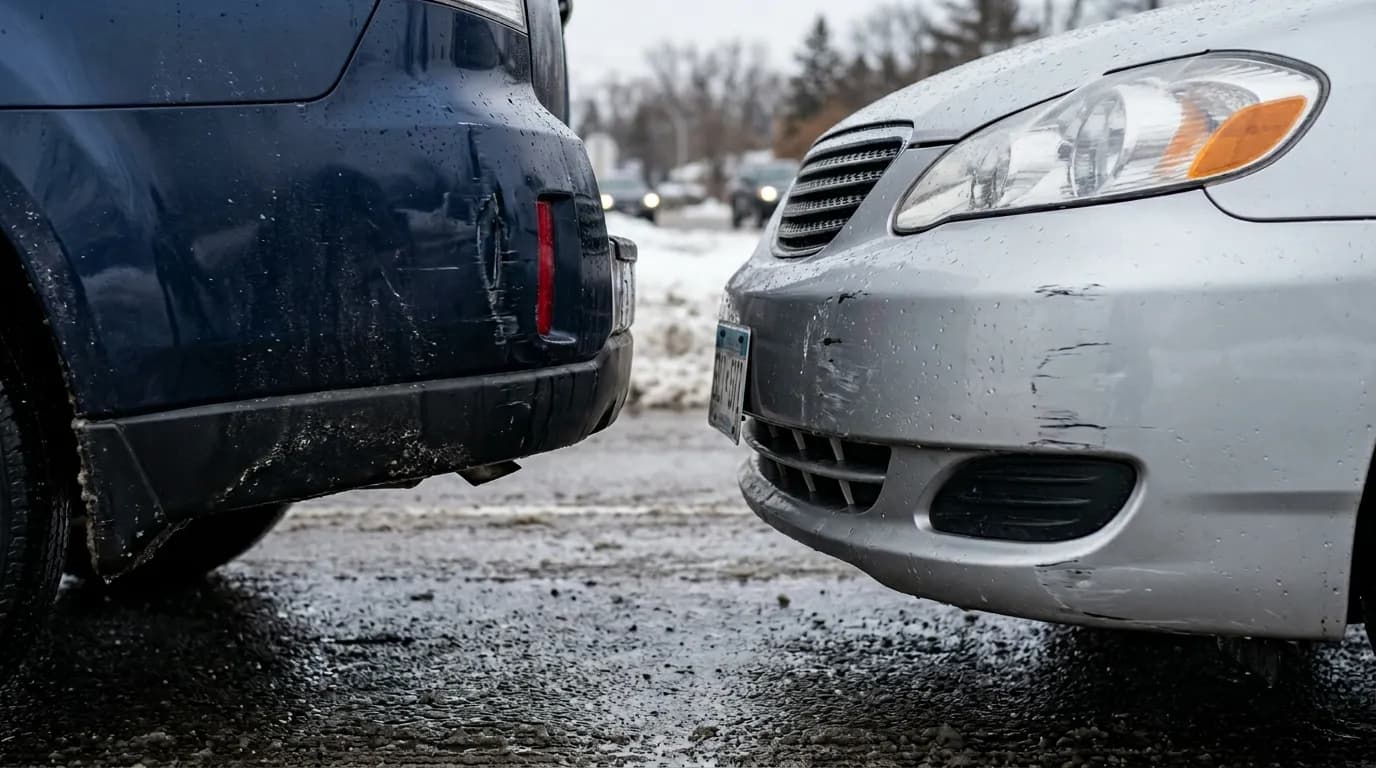
Car insurance rules can be confusing, and Minnesota has some specific ones worth knowing. The state requires minimum liability coverage, personal injury protection, and uninsured motorist coverage — and missing any of them can leave you personally on the hook after a car accident. This guide breaks down the Minnesota auto insurance requirements you need to meet, the optional coverages worth considering, and how to get auto insurance quotes tailored to where you live.
What are the minimum liability insurance requirements in Minnesota for 2026?
Minnesota law requires every driver to carry minimum liability insurance to cover injuries and property damage they cause to others. These aren't suggestions — they're the floor. Carrying the right liability coverage keeps you compliant and protects you from paying out of pocket if you're at fault in an accident.
What coverage limits must Minnesota drivers maintain?
Here's what your auto insurance policy must include at minimum:
- Bodily injury liability: At least $30,000 per person and $60,000 per accident. This pays for medical expenses, rehabilitation, and lost wages for anyone injured in a motor vehicle accident you caused.
- Property damage liability: At least $10,000 to cover damages to another person's motor vehicle or property — a fence, a parked car, a structure — if you're at fault.
These are the state minimums. Many drivers in Minnesota, including those in Minneapolis and the surrounding metro, carry higher limits to reduce their personal financial risk in a serious accident.
How do Minnesota's liability requirements protect you and others?
Liability insurance exists to cover the other person when you cause a car accident. Without it, you'd be paying for their medical bills and property damage directly — and if costs exceed what you can pay, a lawsuit becomes a real possibility. Raising your liability coverage limits beyond the state minimum is one of the smarter risk management moves you can make, especially if you have assets worth protecting.
How does Minnesota's no-fault insurance system affect your car insurance policy?
Minnesota is a no-fault state, which means your own insurance policy pays for your medical expenses and lost wages after a motor vehicle accident — regardless of who caused it. Every driver must carry Personal Injury Protection (PIP) as part of their auto insurance coverage. This speeds up the claims process and reduces the need for immediate legal action after a car accident.
What is Personal Injury Protection and why is it required?
Personal Injury Protection — sometimes called PIP insurance — is mandatory in Minnesota. It covers medical care, rehabilitation, and lost wages for you and your passengers after an injury, no matter who was at fault. PIP insurance means you're not waiting on a liability dispute to get treatment. Your insurer pays first, and the legal questions get sorted out separately if needed.
The required minimum for personal injury protection in Minnesota is $40,000 per person — $20,000 for medical expenses and $20,000 for income loss. Given the cost of injury treatment, many drivers choose to increase this limit in their insurance policy.
How does no-fault insurance impact claims and payments?
Under Minnesota's no-fault system, you file your injury claim with your own insurer after a car accident rather than immediately pursuing the at-fault driver. That cuts down on lengthy legal battles and gets you access to medical care faster. Keep in mind that personal injury protection has limits and doesn't cover property damage to your motor vehicle — that's where liability and collision coverage come in.
If your injuries are severe enough, Minnesota law does allow you to step outside the no-fault system and pursue a personal injury claim against the at-fault driver. A lawyer can help you determine whether your situation meets that threshold.
What optional coverages should Minnesota drivers consider in 2026?
The state minimums are a starting point, not a complete auto insurance coverage strategy. Here are the optional coverages worth adding to your policy:
- Comprehensive coverage: Protects your motor vehicle against non-collision events — theft, vandalism, flood, hail, or hitting an animal. If you're financing or leasing your vehicle, your lender likely requires it.
- Collision coverage: Pays for damage to your motor vehicle from a crash, regardless of fault. Your deductible applies before the insurer pays out.
- Uninsured/underinsured motorist coverage: Covers your medical bills and vehicle damage when the other driver has no insurance or not enough. Given how common underinsured drivers are in Minnesota, this is one of the most practical additions to any insurance policy.
Why is uninsured motorist coverage important in Minnesota?
Uninsured motorist coverage protects you when the at-fault driver either has no vehicle insurance or carries liability insurance that doesn't come close to covering your actual damages. Minnesota requires a minimum of $25,000/$50,000 in uninsured motorist coverage, but underinsured motorist coverage — which kicks in when the other driver's policy isn't enough — is equally worth carrying. Without it, you could be left paying for your own injury and motor vehicle repairs out of pocket through no fault of your own.
What other optional coverages can enhance your protection?
Beyond the core coverages, a few additions can meaningfully reduce your out-of-pocket costs after unexpected events:
- Roadside assistance: Covers towing, flat tires, dead batteries, and lockouts. Inexpensive to add and useful for any motor vehicle owner.
- Rental reimbursement: Pays for a rental vehicle while your car is being repaired after a covered accident. Also called loss of use coverage, it prevents you from being stranded without transportation during the repair process.
- Umbrella insurance: Extra liability coverage that goes beyond the limits of your standard auto insurance policy. If you're in a serious car accident and the damages exceed your liability limits, umbrella insurance covers the gap — protecting your savings, home, and other assets from a lawsuit.
If you already work with an insurance agency for home insurance, life insurance, renters insurance, or business insurance, bundling your auto insurance policy with those coverages can lower your overall premiums. It's worth asking your insurance agent what multi-policy discounts are available.
How can drivers in Shakopee and Prior Lake get personalized car insurance quotes?
Getting accurate car insurance quotes means sharing your driving history, the motor vehicles you're insuring, and the coverage levels you want. Local insurance agents in Shakopee and Prior Lake can compare options across insurance companies and find coverage that fits your situation — rather than a generic policy built for the average driver.
Proof of insurance is required any time you register a motor vehicle in Minnesota, and you're expected to carry it while driving. Getting your coverage set up through a local insurance agency means you'll have someone to call when questions come up — not just a 1-800 number.
What are the benefits of choosing Bradley Hansen Agency for local insurance?
Bradley Hansen Agency knows the Minnesota auto insurance landscape and works with drivers in Shakopee, Prior Lake, and the surrounding area. They can walk you through your liability coverage options, help you decide whether additional personal insurance makes sense for your situation, and make sure your insurance policy actually covers what you think it does. Local service means your insurance agent knows your community — not just your zip code.
How do you request a customized auto insurance quote in Shakopee and Prior Lake?
Call Bradley Hansen Agency at (952) 222-4479. Have your vehicle details and current coverage levels ready so they can put together a quote that reflects your actual needs. Whether you're looking for basic auto insurance requirements coverage or a more complete personal insurance package, they can help you compare car insurance quotes and find the right fit.
A quick review of your Minnesota auto insurance policy can catch gaps before they become expensive problems. Reach out to Bradley Hansen Agency or call (952) 222-4479 to get started.
Closing thoughts
Minnesota's car insurance requirements exist to protect everyone on the road — not just you. Meeting the minimums keeps you legal, but they don't always keep you financially safe. A serious car accident can generate damages that blow past the state's minimum liability limits fast, leaving you personally exposed. The smarter move is to treat your insurance policy as actual risk management, not just a box to check.
If you haven't reviewed your auto insurance coverage in a while, it's worth a conversation with a local insurance agent. Coverage needs change — new motor vehicles, new drivers in the household, changes in income or assets. A quick review of your Minnesota auto insurance policy can catch gaps before they become expensive problems.
Frequently Asked Questions
What is the purpose of Personal Injury Protection (PIP) in Minnesota?
PIP insurance pays for medical bills, rehabilitation, and lost wages for you and your passengers after a motor vehicle accident, regardless of fault. It's required in Minnesota because the no-fault system means your own insurer covers your injury costs first, without waiting on a liability determination.
How does the no-fault insurance system affect my insurance premiums?
No-fault requires every driver to carry personal injury protection, which adds to your base premium. That said, it reduces the number of personal injury lawsuits after car accidents, which can help keep the overall cost of auto insurance more stable. Your driving record, chosen coverages, and deductible levels all affect your final rate. Comparing car insurance quotes across insurance companies is the best way to find a competitive price.
What should I do if I am involved in an accident in Minnesota?
Make sure everyone is safe and call emergency services if there are injuries. Exchange names, contact information, and proof of insurance with the other driver. Take photos of the scene and any vehicle damage, collect witness contact information if possible, and report the car accident to your insurer promptly. Keep records of all expenses related to the accident — medical bills, repair estimates, rental costs.
Are there any penalties for not having the required car insurance in Minnesota?
Yes. Driving without the required vehicle insurance can result in fines, license suspension, and vehicle impoundment. If you're in a car accident without coverage, you could be personally liable for the other party's medical bills and property damage. Keeping your proof of insurance current and accessible is the easiest way to avoid these consequences.
How can I lower my car insurance premiums in Minnesota?
Raising your deductible lowers your premium. A clean driving record helps. Many insurance companies offer discounts for safe driving programs, bundling multiple policies (like auto and home insurance or auto and renters insurance), or completing a defensive driving course. Review your auto insurance coverage annually — you may be paying for options you no longer need.
What is the difference between comprehensive and collision coverage?
Comprehensive covers non-collision damage to your motor vehicle — theft, vandalism, flood, weather events, or animal strikes. Collision covers damage from an actual crash, regardless of who caused it. Both have a deductible. If your motor vehicle is older and paid off, it may not be worth carrying both — an insurance agent can help you run the numbers.